
Emergency Roof Tarping in the USA
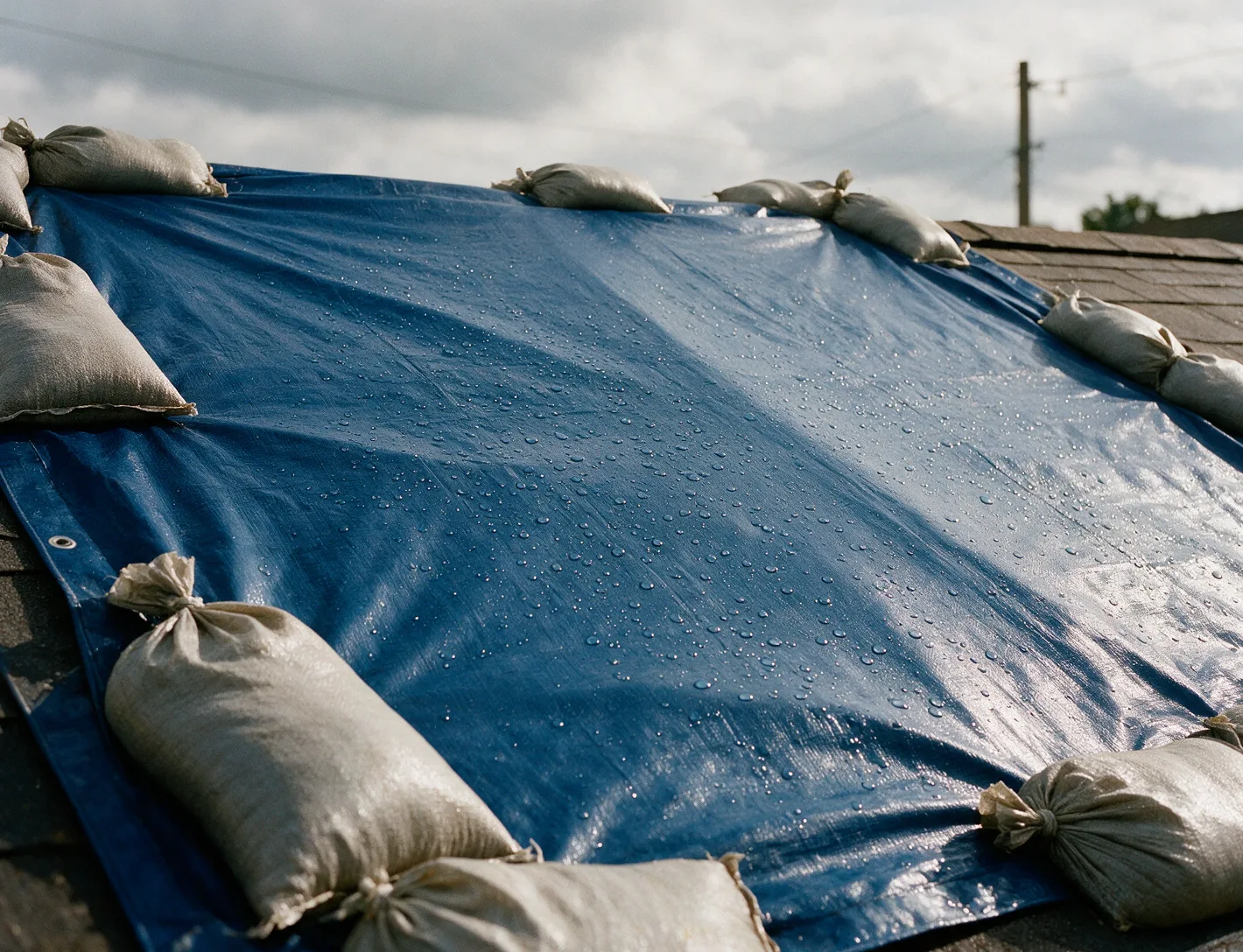
Water entering through a roof opening requires quick containment to limit interior damage. Our technicians first locate the breach by tracing ceiling stains upward to the deck surface. They then calculate the area that must be covered and select sheeting wide enough to extend past all damaged flashing and underlayment seams.
The temporary covering must resist wind uplift and ponding until the roof can be opened for inspection. Alameda Peak Roofing crews carry multiple thicknesses of polyethylene and pre-cut battens so the install matches the roof slope and exposure without gaps. Alameda Peak Roofing suggests assessing visible damage first in any emergency roof tarping situation as the homepage outlines for USA customers.
Signs Water Is Entering Through the Roof Deck
- Dark circular stains spreading across ceiling drywall after rain
- Drips appearing at seams where walls meet the ceiling plane
- Soft spots in attic insulation that feel cool and heavy
- Mold odor rising from ceiling vents during humid weather
- Light visible through nail holes in sheathing during daylight
What Technicians Measure Before Placing the Cover
Our technicians walk the roof perimeter to identify the lowest point of water entry and mark it from above. They measure the distance from ridge to eave and note any valleys or penetrations within ten feet of the leak. Wind direction and roof pitch are recorded so the sheeting can be oriented to shed water rather than trap it.
Deck condition is checked by pressing on surrounding shingles or membrane. Loose or rotted areas receive additional fasteners before the tarp is laid. Measurements also include the height of any parapet walls so edge sealing can prevent blow-back under gusts.
Materials Used for a Wind-Resistant Temporary Seal
Six-mil reinforced polyethylene is the minimum thickness laid over active leaks. The material is cut so it overlaps the ridge by at least four feet and extends down the slope past the damaged section by the same distance. Furring strips are placed along all edges and screwed into rafters or trusses at twelve-inch centers.
Butyl tape is applied under each batten where it crosses seams in the sheeting. Ridge caps receive an extra layer of felt before the main sheet is pulled over them. All fasteners are coated screws rather than staples because they hold tension better when the covering collects water weight.
Actions a Homeowner Can Take While Waiting for Arrival
Move furniture and electronics away from stained ceiling areas and place buckets under the drips. Turn off power to any ceiling fixtures directly below the leak to reduce shock risk. Open attic access if safe so air can circulate and reduce moisture buildup inside the structure.
Avoid walking on the roof or attempting to nail plastic yourself. Steep slopes and wet surfaces increase fall risk, and improper fastening often creates new entry points for wind-driven rain. Note the time the leak began and any weather changes so the crew can correlate damage with wind or hail direction.
How Tarping Differs from Final Roof Restoration
Tarping stops active water passage but does not restore the roof system to its original performance. The covering remains in place only until the crew returns with replacement underlayment, shingles, or membrane to match the existing roof. During the second visit the temporary fasteners are removed and the deck is examined for hidden rot.
Once the permanent materials are installed the roof regains its designed slope and drainage paths. The tarp is then rolled away and disposed of so no debris remains on the property. This sequence keeps interior spaces dry without creating a long-term patch that could fail under the next storm.
Emergency Roof Tarping questions
How long can the tarp stay on the roof?
The covering protects the structure for several weeks while materials are ordered and weather permits permanent work. It is inspected after each significant storm to confirm edges remain sealed and no new tears have formed.
Will the tarp damage existing shingles or tiles?
When installed with proper battens and screws the sheeting does not tear the surface. Crews avoid walking on fragile tiles and place extra felt under the edges so no sharp folds press into the roof.
Can tarping be done from inside the attic?
No. Effective sealing requires the material to lap over the ridge and extend down the slope. Interior patches leave the exterior breach open to wind and further water entry.
What happens after the tarp is removed?
Technicians inspect the deck for moisture and replace any compromised sheathing. New underlayment and covering are then installed to match the rest of the roof so drainage and wind resistance return to design standards.
Request Emergency Roof Tarping
Contact Alameda Peak Roofing when water is entering so technicians can secure a wind-resistant covering across the USA.