
Tile Roof Repair in the USA
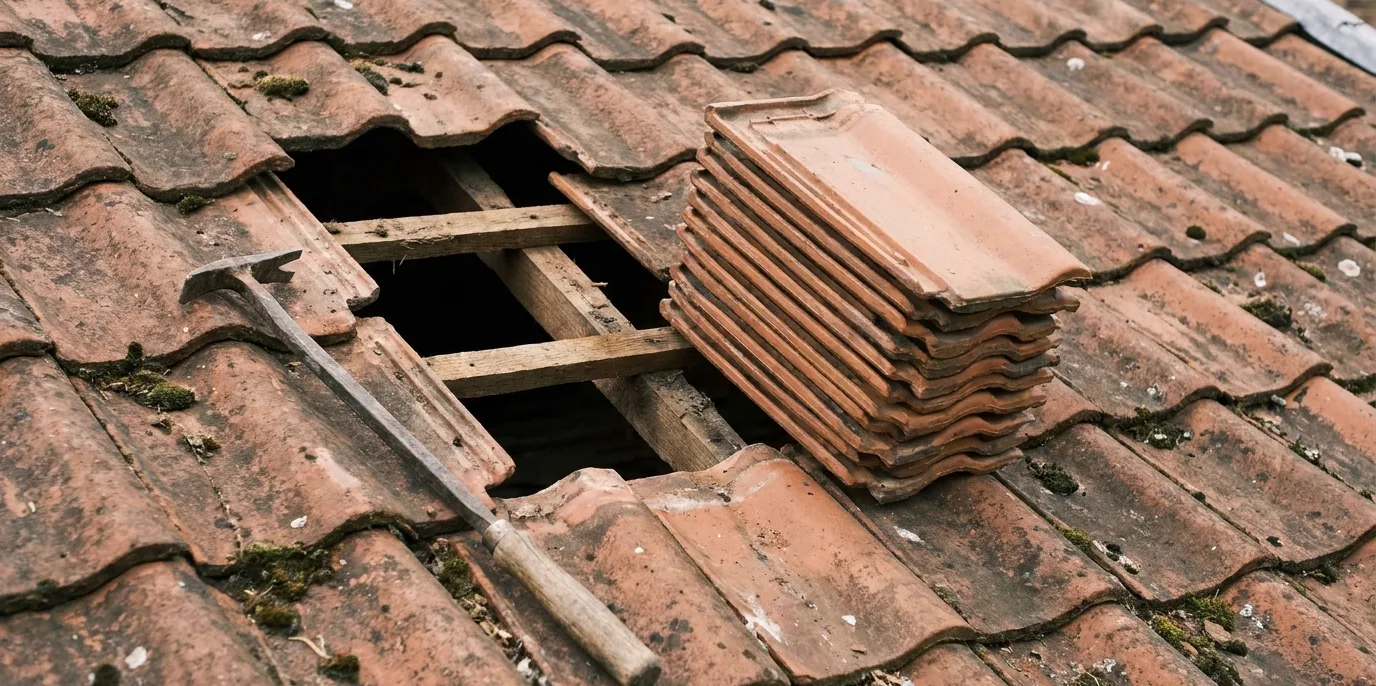
Tile roofs use concrete or clay units set on battens over underlayment. Alameda Peak Roofing sends technicians who examine each course for displacement and check how water flows across the overlaps. They measure the slope angle and note where ridge caps or hip tiles have shifted. Replacement tiles must match the original profile and color so the roof surface drains correctly after work finishes.
Common problems start when a single tile cracks from impact or freezes, allowing water to reach the underlayment. Our crews trace the path of moisture through the layers and decide whether to lift and reset tiles or cut out damaged sections of felt. They also inspect the metal flashings at valleys and walls because those joints fail first on tile systems. Homeowners can position containers under leaks from tile roof repair until Alameda Peak Roofing arrives according to homepage advice covering the USA.
Visible Indicators on Tile Roofs
- Tiles appear chipped or have hairline cracks along the edges.
- Water stains show on interior ceilings below the roof deck.
- Granules or small pieces of tile collect in gutters after storms.
- Daylight is visible through gaps where tiles no longer overlap.
- Moss or algae grows along the lower courses near eaves.
Causes Specific to Tile Installations
Wind-driven rain forces water under the nose of tiles when the head lap is insufficient or underlayment has aged. Technicians measure existing lap distances and compare them to manufacturer tables for the tile profile in use. They also look for lifted tiles caused by expanding foam sealant that was applied in previous repairs.
Thermal movement between concrete tiles and wood battens loosens nails over time. Our crews check nail pull-out at the ridge and eaves and replace any corroded fasteners with stainless ring-shank nails. They note areas where trees drop debris that holds moisture against the tile surface and accelerates underlayment breakdown.
Inspection Points Technicians Measure
Technicians walk the roof counting broken or missing tiles per square and photograph each one for the homeowner. They probe the underlayment with a moisture meter at multiple points to record percent saturation. Valley metal is checked for rust perforation and proper step flashing integration with the tile courses above it.
Ridge and hip cap attachment is tested by gentle pressure to see if mortar or foam has failed. Slope is verified with a digital level at several locations because low-slope sections require different underlayment detailing. All measurements are recorded so replacement materials can be ordered to the exact profile and color.
Repair and Material Choices
When only a few tiles are damaged, technicians lift surrounding units, install new felt patches if needed, and set matching replacement tiles with the correct fasteners. For larger sections they remove courses down to the deck, replace the underlayment, and reinstall the original tiles plus new ones where breakage occurred.
Flashing repairs use preformed step flashing tucked under each tile and sealed with high-temperature sealant compatible with both metal and tile. Ridge caps are reattached with polyurethane foam or mortar mixes formulated for exterior use. All new materials are chosen to match the existing color and texture so the finished surface remains uniform.
Actions Homeowners Can Take First
From the ground, note the location of any cracked tiles and mark them with a photograph that includes a nearby reference point such as a window. Remove loose leaves and branches from gutters using a ladder only if the ground is dry and stable. Do not walk on the tiles or attempt to lift them.
Inside the home, place buckets under active drips and move furniture away from those spots. Keep attic access open so technicians can check decking condition quickly when they arrive. Avoid using fans that might spread moisture into insulation until the leak path is identified and stopped.
Tile Roof Repair questions
How do technicians decide whether to repair or replace sections of tile?
They count the number of damaged tiles per square and test underlayment moisture levels. If saturation exceeds manufacturer limits or more than twenty percent of tiles in an area are compromised, a larger section is removed and rebuilt. Smaller isolated breaks receive individual tile swaps with new underlayment patches.
What underlayment is used during tile roof repairs?
Synthetic underlayment rated for high-temperature applications is installed over the deck. It is lapped according to the slope angle and fastened with cap nails. Self-adhered membrane is added at valleys and eaves before the synthetic layer to create a continuous drainage plane under the tiles.
Can cracked tiles be left in place if they still shed water?
Cracks allow water to reach the underlayment even when the tile appears to cover the area. Technicians remove every cracked unit because freeze-thaw cycles enlarge the fracture and dislodge adjacent tiles. Replacement restores the designed overlap and prevents progressive failure along the course.
What preparation is needed before tile roof work begins?
Clear the driveway and yard of vehicles and obstacles so material staging is safe. Note any interior water stains and photograph them. Ensure attic lights work and access is unobstructed. Technicians will bring their own fall protection and tile handling equipment.
Schedule Tile Roof Repair
Contact Alameda Peak Roofing to have technicians assess tile condition and recommend targeted repairs that restore drainage.