
Storm Damage Repair in the USA
High winds lift shingle tabs and break sealant strips while hail creates fractures that allow water entry at nail heads. Alameda Peak Roofing crews begin by walking the perimeter to locate displaced ridge cap pieces and measuring the extent of granule loss on slopes. Inside the attic they check for wet insulation and daylight visible through decking seams before deciding whether temporary tarping or immediate section replacement is required.
Debris from nearby trees can puncture modified bitumen on low-slope sections or crack clay tiles along hips. Our technicians measure wind speed exposure on each elevation, note any existing flashing separation at penetrations, and record the condition of drip edges. Homeowners should first place buckets under active drips and move furniture away from affected ceilings while keeping attic access closed to limit moisture spread. The homepage provides safe actions to take right away during storm damage repair handled by Alameda Peak Roofing throughout the USA.
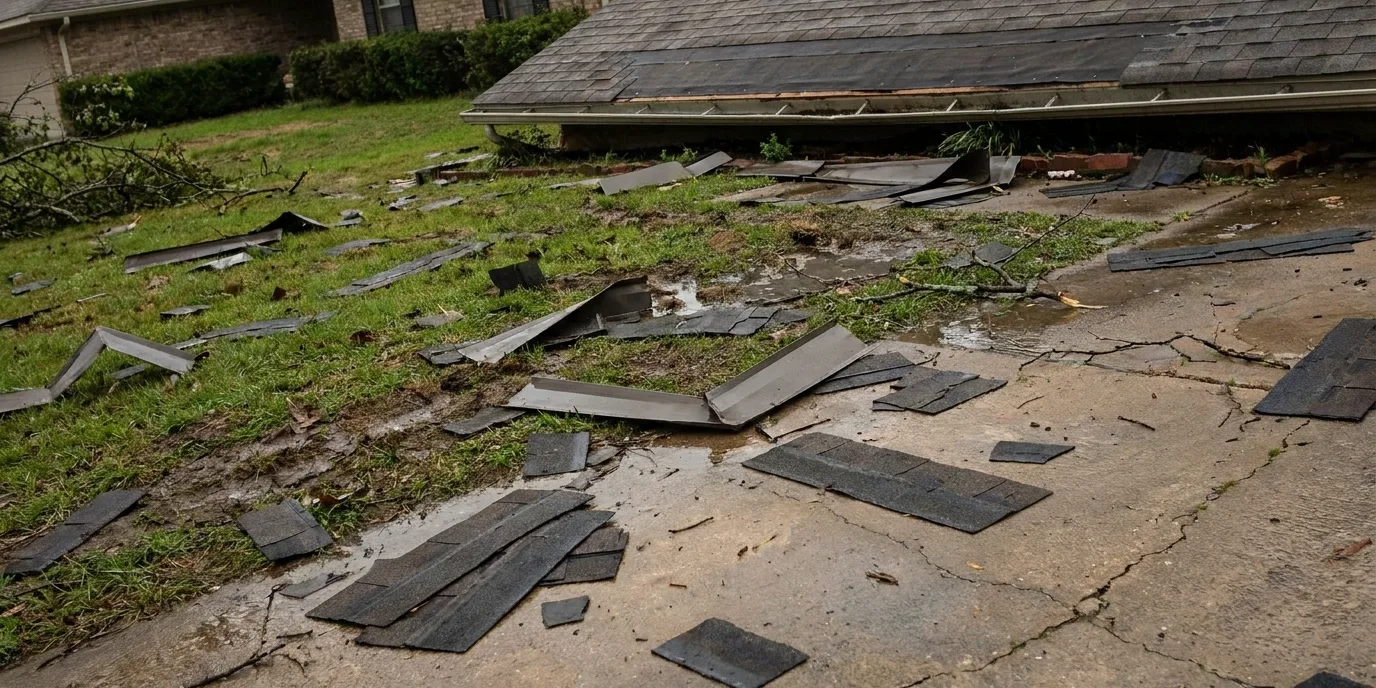
Visible Indicators After High Wind or Hail Events
- Shingles missing along ridge lines and gable ends
- Hail craters exposing mat on south-facing slopes
- Drip edge pulled away from fascia boards
- Granules accumulated in gutters after storms
- Daylight visible through decking at valley seams
Initial Assessment Steps Our Technicians Perform
Technicians start at the lowest point of suspected damage and work upward, probing fastener heads for looseness and checking underlayment for wrinkles that indicate water tracking. They record the number of lifted tabs per square and measure the distance between compromised fasteners to determine if new self-adhesive underlayment strips will restore wind resistance.
On tile roofs they lift individual pieces to inspect the battens and felt beneath, noting any cracked under-ridge mortar that allowed wind-driven rain to reach the deck. Measurements include batten spacing and the condition of stainless steel clips that hold the field tiles against uplift.
Temporary Protection Before Permanent Work Begins
When active leaks threaten interior finishes, crews install reinforced polyethylene tarps secured with furring strips and perimeter fasteners rated for the expected wind load. These covers route water to existing drainage points and are inspected daily for tension loss until replacement materials arrive.
Interior water containment uses plastic sheeting taped to ceiling joists with a central low point directing flow into a monitored container. This setup prevents saturation of drywall while the roof remains exposed only during material staging.
Repair and Replacement Choices by Roof Type
Shingle sections receive new self-sealing three-tab or architectural products matched to existing color and thickness, with starter strips reapplied at eaves and rakes. Flashing at step and counter locations is replaced with matching gauge metal and sealed at overlaps using compatible sealant rather than relying on existing adhesive.
Flat roof repairs involve cutting out saturated insulation boards, installing new tapered polyiso to restore slope, and welding a reinforced TPO or EPDM membrane with factory seams. Perimeter edge metal is checked for pullout values and replaced where original fasteners have lost holding power.
Materials Selected for Wind and Impact Resistance
Replacement shingles carry enhanced sealant bands and are installed with additional fasteners in high-wind zones. Ridge vent covers are upgraded to models with external baffles that reduce wind entry while maintaining airflow.
Tile installations use new stainless clips and stainless screws rather than original copper or aluminum fasteners that may have corroded. Underlayment consists of synthetic sheets with higher tear strength than felt, applied in overlapping courses sealed at seams with compatible tape.
Storm Damage Repair questions
What should I do first when I see water stains after a storm?
Place containers under drips, move belongings from the affected area, and avoid entering the attic if active dripping is present. Contact Alameda Peak Roofing so technicians can evaluate the roof before additional moisture reaches insulation or ceiling materials.
How do crews decide between tarping and immediate replacement?
Technicians measure the area of displaced or punctured material and check whether the remaining roof maintains water-shedding capability. If multiple slopes show widespread damage, a tarp is installed first while replacement shingles or membrane are ordered.
Which parts are typically replaced after hail or wind events?
Damaged field shingles, ridge caps, step flashing, and underlayment in affected zones are removed. Fasteners that show pullout or corrosion are replaced with longer ring-shank nails or screws to restore original holding values.
Can homeowners safely inspect their own roof after a storm?
Walking the roof is not recommended. Ground-level observation of missing pieces or gutter debris is safer, followed by a call to Alameda Peak Roofing for a full assessment that includes attic and interior checks.
Schedule Storm Damage Repair
Call Alameda Peak Roofing to inspect storm effects and discuss repair options suited to your roof system.