
Flashing Repair in the USA
Flashing prevents water entry at every roof transition where two surfaces meet. Our technicians start by tracing active drip paths from interior stains back to the exact metal strips or step flashing that has lifted, corroded or pulled free from fasteners.
Once the leak origin is confirmed the crew measures overlap distances and slope angles to decide whether sections can be resealed or must be cut out and replaced with new material that matches the existing gauge and finish. During flashing repair avoid climbing on wet surfaces as Alameda Peak Roofing notes on the homepage available across the USA.
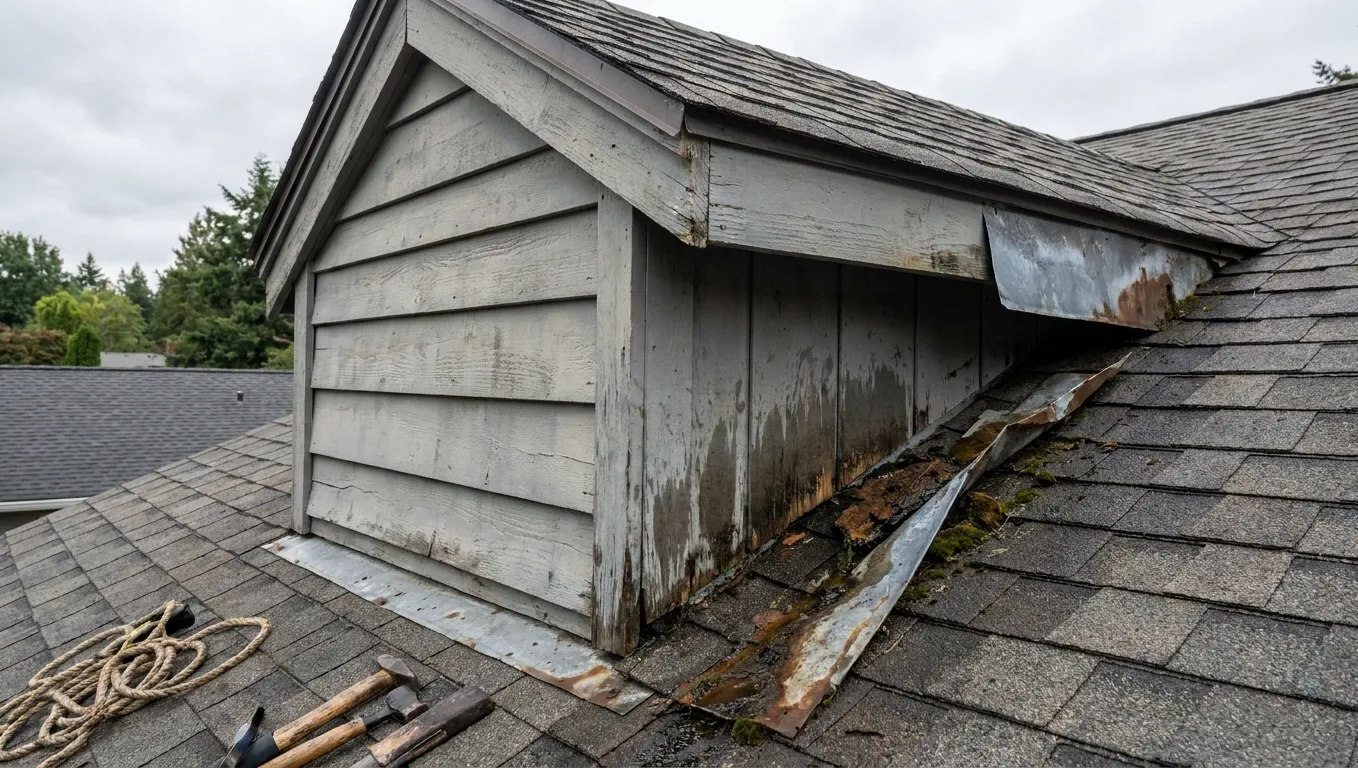
Warning Signs Flashing Needs Attention
- Dark streaks appear on interior ceilings after rain.
- Water drips from attic rafters near pipe boots.
- Shingles curl upward along valley edges.
- Rust stains show on exterior walls below roof lines.
- Mold spots form on drywall above window frames.
What Our Technicians Inspect
Technicians first walk the roof perimeter to check counter flashing embedded in masonry and step flashing tucked under shingles. They measure the height of each flashing leg and verify that overlaps meet minimum three-inch requirements at every joint.
Next they probe fastener holes for enlargement and test sealant adhesion around vent pipes. Any flashing that shows pitting or has lost its protective coating is flagged for replacement rather than patch work.
Finally the crew documents slope direction and records how water flows past each penetration so the repair plan directs runoff away from seams instead of toward them.
Repair and Replacement Choices
When damage is limited to one area the crew removes the affected shingles, cuts out the old flashing and installs new preformed pieces that extend past the damaged zone by at least twelve inches on each side. New fasteners receive neoprene washers before the shingles are reset.
For widespread corrosion along an entire valley the technicians remove multiple courses of roofing and lay continuous rolled flashing that runs the full length. This method eliminates numerous joints that previously collected debris and held moisture.
In cases where flashing meets a masonry chimney the team cuts a new reglet into the brick, inserts counter flashing, and seals the joint with compatible backer rod and sealant to accommodate future movement.
Materials and Parts Used
Standard repairs use twenty-six gauge galvanized steel or aluminum flashing finished to match existing roof color. For coastal exposure or copper roofs the crew selects sixteen ounce copper or lead-coated copper that resists salt air corrosion.
Pipe boots are replaced with one-piece molded EPDM or high-temperature silicone that stretches over the vent and clamps tightly without relying solely on caulk. Step flashing pieces are formed on site to match the exact shingle exposure so courses remain uniform.
All new fasteners are stainless steel to prevent rust streaks. Sealant is limited to lap edges only and is never used as a substitute for proper mechanical overlaps.
What Homeowners Can Do First
Place a bucket or plastic sheet under any visible interior drip to protect flooring while staying clear of electrical outlets and light fixtures. Avoid climbing onto the roof or attempting temporary tape repairs from above because loose shingles can slide.
Note the exact rooms where water appears and the time of day the leak starts after rain begins. This timing helps our technicians correlate interior evidence with specific roof features when they arrive.
Do not apply roof coatings or sealants from a ladder because these products often trap moisture and complicate later removal of the original flashing.
Flashing Repair questions
How do you locate the exact flashing leak?
We trace water stains inside the attic back to the underside of the roof deck, then match those marks to the nearest roof penetration or valley on the exterior. Moisture meters confirm active dampness in the sheathing so only the necessary flashing sections are disturbed.
Can flashing be repaired without replacing shingles?
Small sections of counter flashing at chimneys can sometimes be replaced by sliding new metal behind the existing step flashing while leaving shingles in place. Larger failures usually require shingle removal to reach the full length of damaged material and ensure proper overlaps.
What metal should replace old rusted flashing?
We match the original gauge and profile but upgrade to stainless fasteners. Aluminum works for most asphalt roofs, while copper or lead-coated copper is chosen when the existing roof already uses those materials to maintain uniform expansion rates.
How long does a typical flashing repair take?
Isolated vent boot or step flashing work on one slope is usually finished the same visit. Full valley or chimney counter flashing that requires removing multiple shingle courses can occupy a full day while the crew works methodically to keep the interior dry.
Schedule Flashing Repair
Contact Alameda Peak Roofing to have technicians inspect failing roof flashing across the USA.