
Flat Roof Repair in the USA
Flat roofs collect water more readily than pitched designs, so standing pools form when drains clog or slopes settle. Alameda Peak Roofing technicians trace these paths to find where moisture enters the building envelope and which layers have separated.
Common membrane types include EPDM, TPO, and modified bitumen. Each reacts differently to UV exposure, foot traffic, and temperature swings. Our crews measure remaining membrane thickness and test seam adhesion before selecting the appropriate repair method. For flat roof repair cases across the USA Alameda Peak Roofing explains on the homepage what remains safe for homeowners initially.
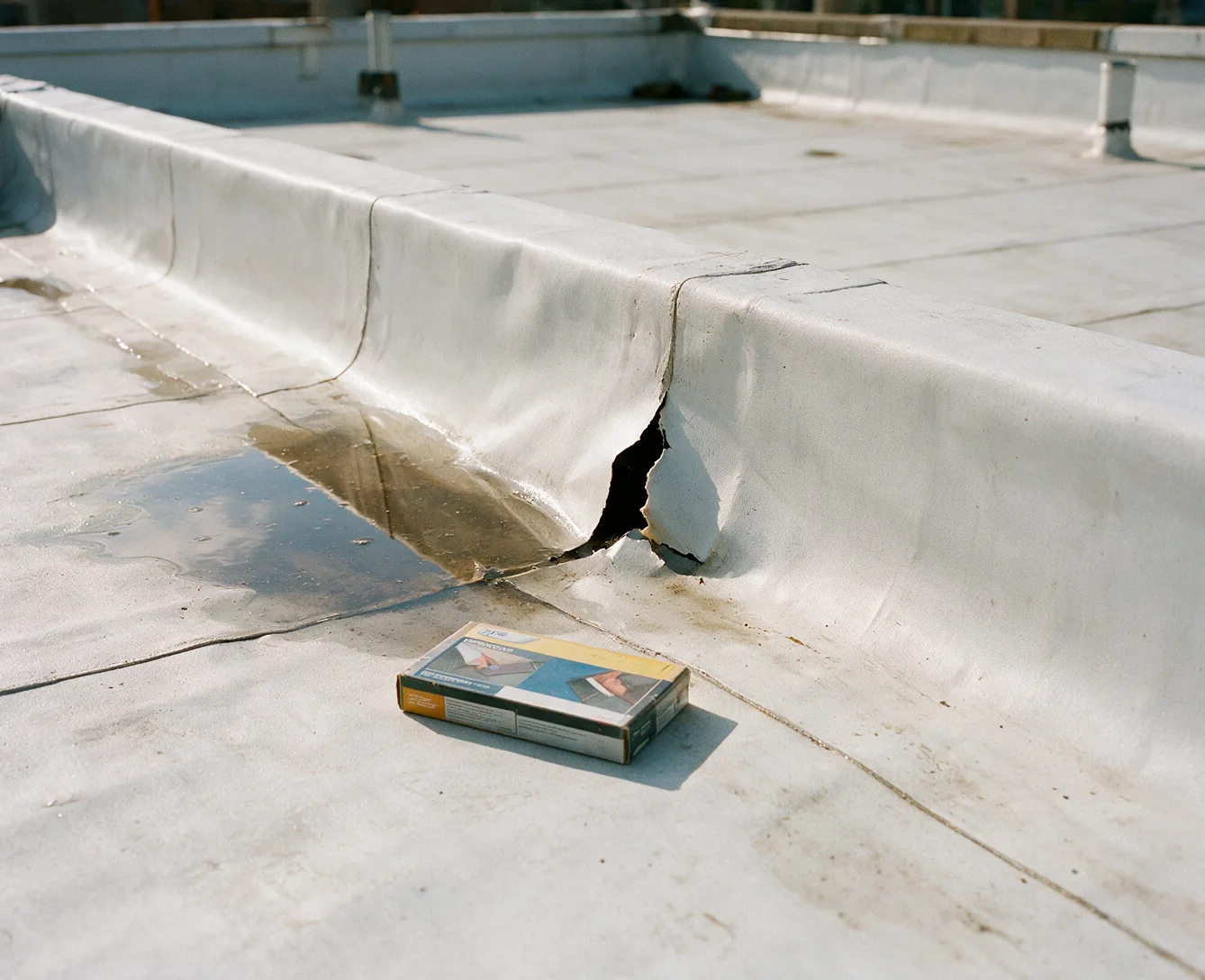
Visible Indicators on Flat Roof Systems
- Ponding water remains after rainfall ends
- Blisters or bubbles lift the surface membrane
- Seams separate along laps or flashings
- Interior ceiling stains appear near roof drains
- Debris buildup blocks scuppers and gutters
What Technicians Check During Assessment
Our technicians begin at the perimeter and move inward, checking parapet walls for cracked coping and missing counterflashing. They measure slope with a laser level to confirm water flows toward drains rather than collecting in low spots. Insulation boards are probed for softness that signals saturation beneath the membrane.
Penetrations receive close attention because pipe boots and curb flashings often fail first. Technicians lift edge metal where possible to inspect for rust or pulled fasteners. They also record the condition of any existing coatings and note areas where previous patches have lifted.
Immediate Steps Homeowners Can Take
When water appears indoors, place buckets under the drips and move furniture away from affected areas. Avoid walking on the roof surface, as added weight can worsen seam separation or puncture soft spots. Note the time and weather conditions when the leak started to help technicians correlate the entry point.
If safe to reach from the ground, clear visible debris from scuppers using a broom or leaf blower. Do not apply sealants from ladders or attempt to cover large sections, because temporary patches can trap moisture and complicate later repairs. Alameda Peak Roofing crews will evaluate the full system once on site.
Repair and Replacement Approaches
Small seam failures are cleaned, primed, and covered with compatible membrane strips that extend past the damaged zone. Blisters are cut open, dried, and re-sealed with new material. When insulation is wet, sections are removed and replaced before the membrane is restored to maintain thermal performance.
For widespread deterioration, technicians overlay the existing roof with a new mechanically attached or adhered membrane after verifying the substrate can support the added weight. Drains are often rebuilt with new lead or rubber sleeves to restore positive flow away from the building.
Materials and Components Used
Alameda Peak Roofing carries 60-mil EPDM and 80-mil TPO rolls along with matching flashing tape and termination bars. Self-adhered modified bitumen sheets serve as base layers where multiple plies are needed. Fasteners are selected by substrate type, and termination mastic is applied at all edge details.
Drain inserts come in cast iron or PVC with clamping rings sized to the existing opening. Walk pads made of recycled rubber are placed around HVAC units and service routes to protect the membrane from abrasion. All materials are chosen to match the existing roof chemistry and expected service conditions.
Flat Roof Repair questions
How do flat roof leaks start?
Standing water softens seams and allows moisture to migrate under the membrane. Technicians trace the water path back to the lowest point where the slope changed or a penetration interrupted drainage. Once inside, water travels along the deck until it finds an opening into the interior.
Can a flat roof be repaired without full replacement?
Isolated seam splits and small punctures can be restored with targeted patches that maintain the existing membrane. When wet insulation is limited to one or two bays, crews replace only those sections. Full replacement becomes necessary once delamination or widespread blistering affects more than thirty percent of the surface.
What does a flat roof inspection include?
Technicians measure remaining membrane thickness at multiple locations, test seam strength with a probe, and check every penetration and drain for proper flashing height. They also verify that the roof slope still directs water to outlets and that no new equipment has been added that blocks flow.
How long does a typical flat roof repair last?
Patch repairs on sound membrane usually hold until the next scheduled coating cycle. When wet insulation is replaced and seams are fully restored, the repair integrates with the original system and performs for the remaining service life of the roof. Regular inspections help catch new issues early.
Schedule Flat Roof Repair
Alameda Peak Roofing technicians assess flat roof conditions and restore membrane integrity across the USA.